Thursday, November 17, 2011

Fall Midwest Allergy Relief


If it’s fall, you suffer from airborne allergies, and you live in the Midwestern United States chances are your body is reacting to weed pollen. And Ragweed is one of the most potent pollens known.

Unless you lock yourself in a glass bubble until after the first frost, it is next to impossible to avoid coming in contact with this allergen. However, you can control how much of it is in your indoor air.

Pollen is lightweight and can and does cling to hair, packages, pets that go in and out from your home, book bags, and grocery bags.

That leaves it free to go airborne in your home again and again with normal movements. This means your home is almost as irritating as the outdoors.

Even after all the research about allergies, most professionals agree that the best way to minimize allergies is to avoid the trigger. Filtering the indoor air continuously is a proactive yet non-invasive and effective way to keep pollen levels low indoors.

The best type of filter for removing airborne particles is the HEPA filter. This type of filter can remove 99,997 out of every 10,000 airborne particles as small as .3 microns from the air. And most pollens are quite a bit larger that even 1 micron.

PurerAir.com offers a HEPA allergy air purifier that is designed to remove weed pollen in the fall as well as tree pollen in the spring and grass pollens in the summer.

In addition to pollen this air cleaner can also remove other airborne irritants that can work in conjunction with seasonal pollens. These include but are not limited to dust, dust mites mold and mildew spores, pet dander, mold, and mildew spores.

See the Hay Fever Air Purifier that can minimize triggers in the fall and year round now at http://purerair.com/hay_fever_air_purifier.html

Take good care,

Debbie Davis, President
PurerAir.com
(800) 997-2989

Labels: , , , , ,

Wednesday, August 17, 2011

Ragweed Allergy Symptoms


As summer winds down ragweed is growing up along the side of the roads, in between cracks on the sidewalk, and in the neighbor’s untended yard.

And once it matures it will send out millions of spores to help it continue to thrive. If you are allergic to ragweed, this is not such good news.

Symptoms for this allergy are like those caused by most airborne irritants. You probably experience sneezing, coughing, watery eyes, and congestion when outdoors particularly on dry, windy days.

And even if you don’t see this trouble making weed, the ugly truth is that spores can travel for miles from where the original plant released them. So moving to another neighborhood won’t make a bit of difference.

What you can do is avoid the trigger. Pick times to be outdoors when there are known to be fewer spores in the air.

And filter the air indoors with a HEPA or high efficiency particle arresting purifier that can remove airborne particles (such as ragweed pollen) as small as .3 microns in size.

Fall is such a beautiful time of year. It would be a shame to let ragweed pollen spoil the season for you again this year. Let the Hay Fever Air Purifier help you enjoy fall like you never have before.

See this air purifier now at http://purerair.com/hay_fever_air_purifier.html

Take good care,

Debbie Davis, President
PurerAir.com
(800) 997-2989

Labels: , , , ,

Sunday, September 12, 2010

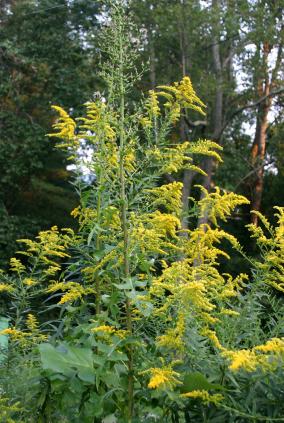
Goldenrod and Ragweed Described


If you suffer from hay fever that is triggered by weed pollen, you will need to know how the various weeds look. When it comes to potency, ragweed rules. It is probably the most troublesome allergen in the fall. Its appearance is quite bland.

Goldenrod on the other hand is a very flashy weed that sends out beautiful yellow stalks. It’s actually very beautiful as a fall arrangement. And far fewer people are allergic to this weed.


Here are pictures of them both (goldenrod above and ragweed on the right). Take a walk around where you live to see what’s growing in your neighborhood.

Armed with pictures of these weeds, you can take great comfort in that fact that for every ragweed plant you cut down, you are decreasing the number of pollen grains by about one million.

And even though you can’t control the weed pollen outside, you can control it inside and manage your hay fever beautifully with the Hay Fever Air Purifier at http://purerair.com/hay_fever_air_purifier.html

Take good care,
Debbie Davis, President
PurerAir.com
(800) 997-2989

Labels: , , , ,

Saturday, August 21, 2010

Ragweed Pollen Allergy Management


Ragweed, as its name suggests, is a weed that grows in the summer and begins to send out pollen around August 15.

Pollination continues until the end of October and in many areas into the beginning of November when the first frost shuts it down.

This little nondescript plant sends out over one billion pollen granules which send hay fever sufferers running for cover. If you are one of those sufferers, you are not alone. Millions and millions of people suffer from fall allergies which can range from slightly annoying to causing weeks of misery.

Moving to another city won’t help because the pollen is so light weight and can travel for miles with the wind. Planting different plants in the garden won’t help for the same reason. But creating a safe place inside your home and office will.

HEPA or high efficiency particle arresting filtration has been proven to be best at removing fine particles like pollen from the air. Having an air cleaner that can run 24 hours every day 365 days of the year can eliminate not only pollen but other more usual particulates found in the home.

And since dust, dust mites, mold spores, and pet dander often serve as secondary triggers for allergies, taking them out of the air is a good idea and can only make the air healthier to breathe.

Manage your ragweed pollen allergies with the medical grade HEPA air purifier at http://purerair.com/hay_fever_air_purifier.html

Take good care,
Debbie Davis, President
PurerAir.com
(800) 997-2989

Labels: , , , , ,