Thursday, November 17, 2011

Fall Midwest Allergy Relief


If it’s fall, you suffer from airborne allergies, and you live in the Midwestern United States chances are your body is reacting to weed pollen. And Ragweed is one of the most potent pollens known.

Unless you lock yourself in a glass bubble until after the first frost, it is next to impossible to avoid coming in contact with this allergen. However, you can control how much of it is in your indoor air.

Pollen is lightweight and can and does cling to hair, packages, pets that go in and out from your home, book bags, and grocery bags.

That leaves it free to go airborne in your home again and again with normal movements. This means your home is almost as irritating as the outdoors.

Even after all the research about allergies, most professionals agree that the best way to minimize allergies is to avoid the trigger. Filtering the indoor air continuously is a proactive yet non-invasive and effective way to keep pollen levels low indoors.

The best type of filter for removing airborne particles is the HEPA filter. This type of filter can remove 99,997 out of every 10,000 airborne particles as small as .3 microns from the air. And most pollens are quite a bit larger that even 1 micron.

PurerAir.com offers a HEPA allergy air purifier that is designed to remove weed pollen in the fall as well as tree pollen in the spring and grass pollens in the summer.

In addition to pollen this air cleaner can also remove other airborne irritants that can work in conjunction with seasonal pollens. These include but are not limited to dust, dust mites mold and mildew spores, pet dander, mold, and mildew spores.

See the Hay Fever Air Purifier that can minimize triggers in the fall and year round now at http://purerair.com/hay_fever_air_purifier.html

Take good care,

Debbie Davis, President
PurerAir.com
(800) 997-2989

Labels: , , , , ,

Sunday, September 25, 2011

Managing Hay Fever Symptoms


Hay fever is not caused by hay nor is accompanied by a fever. This term was coined at a time when there was less knowledge about this condition which usually occurred during fall harvesting of hay.

Today, due to extensive research and studies, we know that this condition can happen anytime during the year and symptoms include irritation and swelling of nasal and sinus tissues making it hard to breathe.

Watering eyes, runny nose, and coughing from post nasal drip all combine to make this a miserable condition at best.

In the fall this condition is most often triggered by airborne weed pollen from ragweed, curly dock, lambs quarters, pigweed, plantain, sheep sorrel and sagebrush. The pollen is light weight and there is more in the air on dry windy days.

There is nothing you can do about what’s in the air outside, but you can drastically reduce hay fever symptoms while indoors by eliminating the pollen from the air in your home and office. Removing triggers from the air means avoiding the allergen, and that is still one the best, most non-invasive ways to mange allergies.

A HEPA or high efficiency particle arresting filter is literally just what the doctor ordered. Used in hospitals to insure clean air, this type of filter is almost always a part of an allergy management program that doctors' recommend.

This type of filter is able to remove 99.97% of particles that are as small as .3 microns in size. Pollen is quite a bit larger that .3 micron, so it and other more normal household triggers such as dust, dust mites, mold and mildew spores, pet dander, bacteria and viruses are also easily removed.

Don’t let the fall season make you miserable again this year. See the Hay Fever Air Purifier from PurerAir.com that has 4 particle filters (including the HEPA), and let it clear your air continuously. See it for yourself now at http://purerair.com/hay_fever_air_purifier.html

Take good care,

Debbie Davis, President
PurerAir.com
(800) 997-2989

Labels: , , , ,

Wednesday, August 24, 2011

Relief From Pigweed Allergies


Late summer signals the growth and pollination of pigweed. This small, scrubby little weed usually makes its entrance late in the summer when the soil is dry and the grass is less dense.

It is prolific at seed and pollen production. The good news is that it is often used as pig fodder. The bad news is that if you are allergic to it, each plant can potentially send out thousands of pollen grains.

There’s not much you can do to control outdoors, but you can control how much of it stays in your air indoors.

Filtering the air with an air cleaner that is specifically designed to remove pollen and other allergens from the air is one of the best solutions.

Pigweed is not the only weed that sends out pollen during the late summer and early fall. So it is best to choose an air purifier that can also remove pollen from ragweed, curly dock, lambs quarters, pigweed, plantain, sheep sorrel and sagebrush as well.

In addition to these seasonal pollens the best cleaner should also be able to eliminate normal household allergens that can also trigger allergies such as household dust, dust mites, mold and mildew spores and pet dander.

PurerAir.com offers the Hay Fever Air Purifier for effective and long-lasting relief from allergies triggered by seasonal pollens. See it now at http://purerair.com/hay_fever_air_purifier.html

Take good care,

Debbie Davis, President
PurerAir.com
(800) 997-2989

Labels: , , , , , ,

Wednesday, August 17, 2011

Ragweed Allergy Symptoms


As summer winds down ragweed is growing up along the side of the roads, in between cracks on the sidewalk, and in the neighbor’s untended yard.

And once it matures it will send out millions of spores to help it continue to thrive. If you are allergic to ragweed, this is not such good news.

Symptoms for this allergy are like those caused by most airborne irritants. You probably experience sneezing, coughing, watery eyes, and congestion when outdoors particularly on dry, windy days.

And even if you don’t see this trouble making weed, the ugly truth is that spores can travel for miles from where the original plant released them. So moving to another neighborhood won’t make a bit of difference.

What you can do is avoid the trigger. Pick times to be outdoors when there are known to be fewer spores in the air.

And filter the air indoors with a HEPA or high efficiency particle arresting purifier that can remove airborne particles (such as ragweed pollen) as small as .3 microns in size.

Fall is such a beautiful time of year. It would be a shame to let ragweed pollen spoil the season for you again this year. Let the Hay Fever Air Purifier help you enjoy fall like you never have before.

See this air purifier now at http://purerair.com/hay_fever_air_purifier.html

Take good care,

Debbie Davis, President
PurerAir.com
(800) 997-2989

Labels: , , , ,

Sunday, September 12, 2010

Goldenrod and Ragweed Described


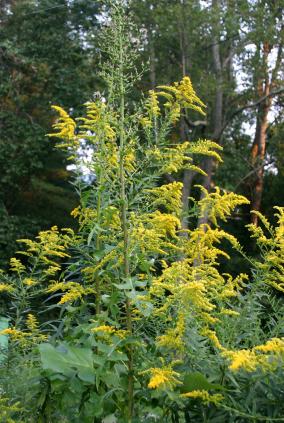
If you suffer from hay fever that is triggered by weed pollen, you will need to know how the various weeds look. When it comes to potency, ragweed rules. It is probably the most troublesome allergen in the fall. Its appearance is quite bland.

Goldenrod on the other hand is a very flashy weed that sends out beautiful yellow stalks. It’s actually very beautiful as a fall arrangement. And far fewer people are allergic to this weed.


Here are pictures of them both (goldenrod above and ragweed on the right). Take a walk around where you live to see what’s growing in your neighborhood.

Armed with pictures of these weeds, you can take great comfort in that fact that for every ragweed plant you cut down, you are decreasing the number of pollen grains by about one million.

And even though you can’t control the weed pollen outside, you can control it inside and manage your hay fever beautifully with the Hay Fever Air Purifier at http://purerair.com/hay_fever_air_purifier.html

Take good care,
Debbie Davis, President
PurerAir.com
(800) 997-2989

Labels: , , , ,

Sunday, August 15, 2010

Ragweed Season Begins Today


Fall allergies, hay fever, and allergic rhinitis are generally caused by weed pollen. And the most notorious weed of the season is ragweed.

It is believed that each plant sends out over one million grains of pollen per season.

And most often the season last from mid august (August 15) through the end of October or until the first frost.

Ragweed is a tenacious plant that can and does grow anywhere. It can be found in your garden, by the side of the road, or in the heart of the city growing in the cracks of parking lots and sidewalks. For all the trouble it causes it is nondescript in appearance and should not be confused with colorful Goldenrod that also blooms in the fall.

Getting out of the way of these flying particles is next to impossible. They are so light weight that they travel for miles. This pollen attaches easily to hair, clothes, packages, and pets and floats in through open windows and doors into your indoor air.

Filtering your air constantly is the only way to effectively stop the build up of ragweed and other pollens to allergy triggering levels in your indoor air. And a high efficiency particle arresting or HEPA filter is the best choice for the job. And because airborne allergies are most often triggered by a combination of allergens—dust, dust mites, mold spores, and pet dander (to name a few) this type of filtration can remove 99,997 out of every 10,000 airborne allergens that are greater than .3 microns in size.

Fall doesn’t have to be a season that you dread any longer. Put the Hay Fever Air Purifier to work for you. And there's no better time to literally nip this problem in the bud than now! See it at http://purerair.com/hay_fever_air_purifier.html

Happy fall!

Debbie Davis, President
PurerAir.com
(800) 997-2989

Labels: , , , , , ,

Friday, August 13, 2010

Allergy and Asthma Air Purifier

If you suffer from allergies, asthma or any other respiratory condition, you know that effective management and control can mean the difference between just living from day to day and having a quality of life that will allow you to enjoy all that the world has to offer.

Part of any good management plan for allergies and asthma should include removal of airborne allergens that trigger flare ups most quickly. And whereas nothing can be done about allergens outdoors, if you suffer from seasonal allergies the number of outdoor pollutants found inside will increase.

Flower and tree pollen in the spring, grass pollen in the summer, and fall pollens such as ragweed find their way into your home through doors and windows, on clothes and packages, and on pets. Add these to normal indoor pollutants like dust, dust mites, pet dander, and mold spores and you’ve got poor air quality that is likely to make breathing difficult and raise your anxiety level.

A medical grade air purifier with a HEPA or high efficiency particle arresting filter and carbon cloth for additional particulate, gas and odor filtration is essential to keep flare ups at bay and avoid peaks in attacks when seasonal allergens are present.

See the allergy air purifier for all seasons now at http://purerair.com/allergy_machine.html

Take good care,
Debbie Davis, President
PurerAir.com
(800) 997-2989

Labels: , , , ,